
A longtime effort to bring casinos and legalized sports betting to Texas is getting another shot, but this time, the political landscape looks considerably different.
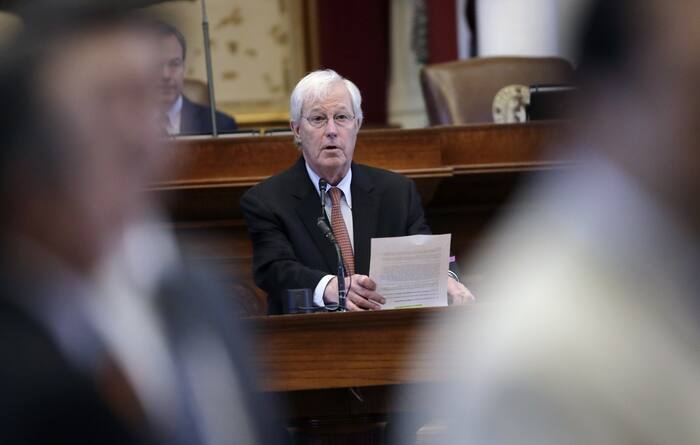
State Rep. Charlie Geren, a Fort Worth Republican, filed House Joint Resolution 52 on Monday, proposing a constitutional amendment that would allow Texas voters to decide whether the state should legalize casino gambling and sports wagering.
Geren has tried before. His previous efforts failed to overcome resistance in the Texas Legislature, particularly in the Senate, where outgoing Lt. Gov. Dan Patrick has long opposed expanding gambling.
But following last week’s election, the same proposal is entering a very different political environment.
Democrats are preparing to take control of the Texas House, Gina Hinojosa is headed to the governor’s mansion and Vikki Goodwin will replace Patrick as lieutenant governor.
For gambling supporters, the changes could offer an opportunity that has been missing for years.
HJR 52 would begin the process of changing the Texas Constitution to allow the Legislature to authorize casino gambling and sports betting.
The proposal would not immediately legalize either activity.
Instead, lawmakers would first need to approve the proposed constitutional amendment before sending it to Texas voters for a final decision.
Geren’s latest filing follows a similar proposal he introduced in 2025, House Joint Resolution 137, which called for the state to regulate and tax casino gaming and sports wagering while requiring operators to obtain licenses.
That resolution was referred to the House State Affairs Committee in March 2025 but never advanced to a full House vote. Geren also pursued a more expansive gambling proposal in 2023 that included destination resort casinos and the creation of a state gaming commission. That effort also failed to advance.
Geren is far from the only Texas lawmaker who has attempted to expand gambling in the state.
State Sen. Carol Alvarado, a Houston Democrat, has repeatedly introduced legislation to legalize casino gambling. Her 2025 proposal, Senate Joint Resolution 16, would have authorized destination resort casinos and sports wagering while establishing a Texas Gaming Commission to regulate industry.
Meanwhile, Republican state Rep. Sam Harless of Spring introduced House Joint Resolution 134 in 2025, seeking to allow voters to decide whether Texas should legalize sports betting. Democratic state Sen. Juan “Chuy” Hinojosa filed an identical companion in the Senate.
Neither proposal advanced out of committee.
Geren’s latest resolution is among the first gambling elgalization measures identified following the opening of bill filings for the 2027 legislative session. Whether Alvarado, Harless or other lawmakers introduce proposals remains to be seen.
The biggest difference isn’t necessarily the proposal itself. It’s who will be running the Texas government when lawmakers return to Austin in January.
Patrick’s opposition to gambling expansion has been one of the most significant obstacles facing supporters, particularly in the Republican-controlled Senate.
His successor, Goodwin, has taken a different approach.
As a state representative, Goodwin supported legislation that would have allowed Texans to vote on expanding gambling.
Her election does not guarantee that a gambling proposal will pass, but it could give the issue an opportunity for consideration in the Senate that it struggled to receive under Patrick.
Meanwhile, Democrats’ new majority in the Texas House could change the legislative debate there as well.
However, a Democratic-controlled House does not automatically translate into support for casinos or sports betting.
Governor-elect Hinojosa, for example, voted against proposed gambling constitutional amendments as a state representative in 2023.
Her position underscores an important distinction: While the election changed which party controls much of Texas government, it did not establish a consensus among Democrats on legalizing gambling.
Even with new leadership, Geren’s proposal faces a substantial challenge.
Changing the Texas Constitution requires approval from two-thirds of both legislative chambers.
That means at least 100 votes in the 150-member Texas House and 21 votes in the 31-member Texas Senate.
Republicans retained control of the Senate in last week’s election, holding 19 seats compared with Democrats’ 12.
Even if every Democratic senator supported Geren’s proposal, at least nine Republicans would also need to vote in favor.
Goodwin’s influence could also depend on the rules adopted by senators when the new legislative session begins.
Republicans could move to limit her authority over committee assignments or other legislative procedures, potentially complicating efforts to advance gambling legislation.
And even if the Legislature approves the resolution, Texas voters would still have to approve the constitutional amendment before the state could move forward.
Geren’s resolution is among the proposals filed ahead of the 90th Texas Legislature, which convenes Jan. 12, 2027.
The filing marks another attempt to revisit a debate that has repeatedly stalled in Austin.
For now, Texas gambling laws remain unchanged, and there is no guarantee the proposal will reach voters.
But with Patrick leaving office and new leadership preparing to take power, the question is no longer simply whether Texas lawmakers will try again to legalize gambling.
It’s whether the political obstacles that defeated previous attempts have finally weakened enough to give the latest proposal a chance.


